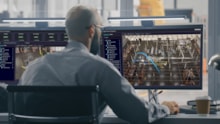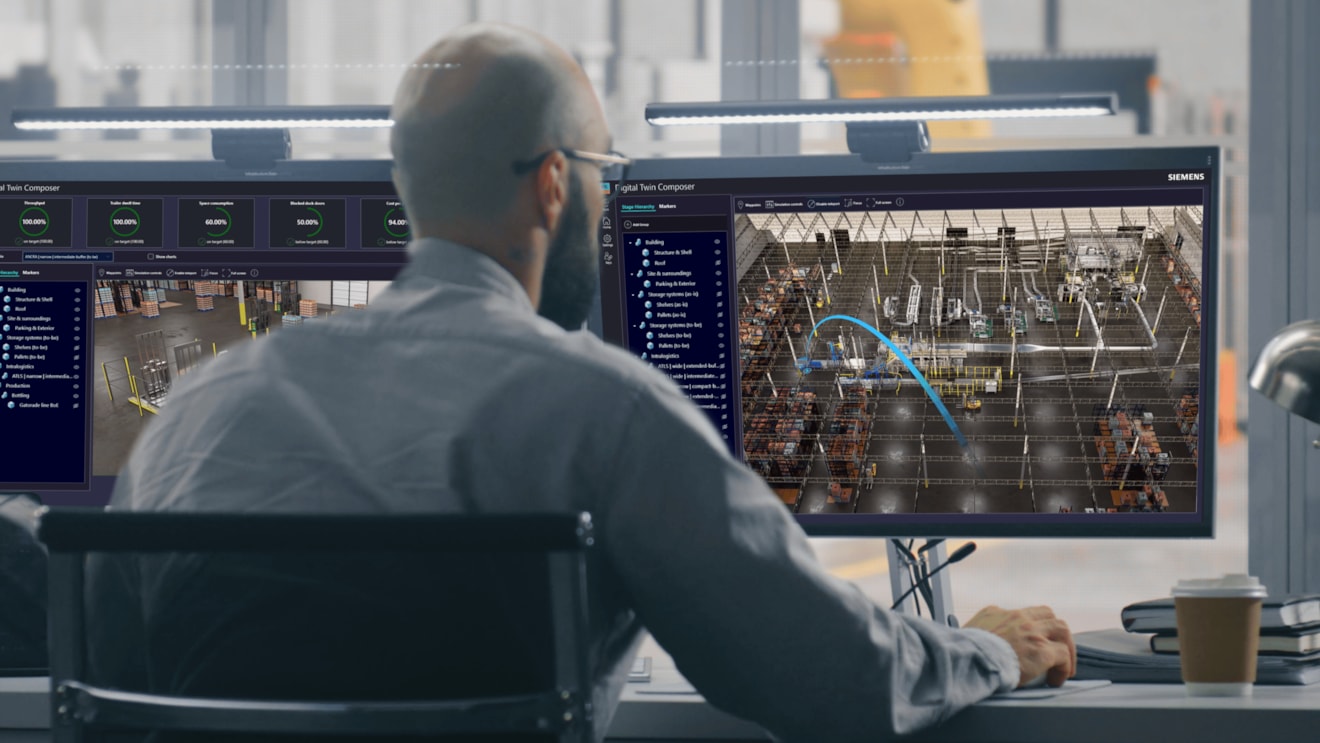
Siemens, in collaboration with NVIDIA, is enabling UK and Ireland customers to experience an immersive, physics-based Digital Twin of their products or processes that allows them to apply industrial AI, simulation and real-time physical data to make decisions virtually, at speed and at scale.
The new Digital Twin Composer software – part of Siemens Xcelerator – was showcased at Transform 2026, Siemens’ biennial industrial technology showcase event in Manchester. Brian Holliday, CEO of Siemens UK and Ireland, was joined by NVIDIA regional director, UK&I, Anthony Hills to demonstrate how comprehensive Digital Twins, real-time operational data and physical AI can be used to support faster and lower-risk decision-making.
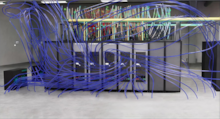
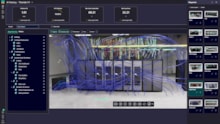
Siemens’ Digital Twin Composer enables industrial companies to combine 2D and 3D data from Siemens’ comprehensive digital twin with physical real-time information in a managed, secure real-time visual scene, built using NVIDIA Omniverse libraries. With Digital Twin Composer, companies can rapidly build and maintain this global environment, containing all aspects of their product or production data (both virtual and physical) in a secure, managed high-fidelity 3D experience, throughout the lifecycle of the product, process or facility.
The tool enables companies to combine digital twin data with physical information, which can be used to generate real-time insights and intelligence to visualise and iterate any element of a factory process or product in the field in the digital world.
Siemens says the use of Industrial AI to simulate entire processes is designed to help businesses respond to pressures like connecting and simulating the complex and vast amount of data from the engineering and production lifecycles to increase productivity, achieve product and production performance goals, improving resilience and cutting emissions.
This means organisations can model a facility, production line or process, then test how it would respond to different scenarios. These could include changing the layout of a factory, introducing new automation, increasing production capacity, altering material flows through a warehouse, or validating equipment before it is installed. Leveraging Industrial AI throughout the process, this enables companies to optimize throughput and test multiple scenarios for productivity.
The solution has been deployed with PepsiCo in an industry-first collaboration with Siemens and NVIDIA to transform plant and supply chain operations through advanced digital twin technology and AI. This collaboration marks a first-of-its-kind initiative for a global Consumer Packaged Goods (CPG) company applying digital twins to reshape how plant and warehousing facilities are digitally simulated and tested.
The approach has helped PepsiCo in identifying up to 90 percent of potential issues before any physical modifications occur. This approach has already delivered a 20 percent increase in throughput on initial deployment and is driving faster design cycles, nearly 100 percent design validation and 10 to 15 percent reductions in capital expenditure (Capex) by uncovering hidden capacity and validating investments in a virtual environment.
Meanwhile global supply chain solutions and logistics company KION is using the technology to enable multiple processes to be simulated in parallel and in real time – unlocking a previously unattainable level of efficiency and flexibility.
Brian Holliday, CEO of Siemens UK & Ireland, said: “Organisations across industry and infrastructure are facing new and complex challenges that necessitate faster transformation. Operational factories and grid networks however are difficult places to experiment with every change having a cost in effort, expenditure, energy or risk.
“Industrial AI and digital simulation provide businesses a practical way to test decisions and designs before they attract cost in the physical world. An example might be improving a production line to increase capacity or reduce energy. Validating an automation design means teams can truly optimise for a desired business result and also iron-out typical project problems too.
“We’re already using the product with major customers in the US and see huge potential to underpin the transformation of UK industry. It fundamentally reduces software engineering effort, a former barrier to digital twin adoption. By connecting simulation, physical AI and live operational data, companies can solve real problems at pace, move with more confidence and reduce the risk of costly mistakes.”
Siemens Transform 2026 is a two-day event bringing together manufacturers, infrastructure operators and industrial technology leaders to Manchester, UK, to explore how digitalisation, automation and AI are changing the way products and industrial systems are designed, built and operated.